With storms, blackouts and tornadoes being a major threat to the stability of power, I recently began looking at solar panels for a lightweight alternative power source during an outage and for summer outdoor use. I was looking for something that wasn't quite as heavy as a traditional fixed position panel and the highest wattage wasn't necessary. I came across a few 5-7 watt thin film folding panels, which were very nice but were also well over my budget at over $100. I then began looking at the flexible panels, which were still pretty expensive, because of their use of expensive solar technologies. It wasn't until late in the search that I came across inexpensive panels using the more common crystalline solar cells, which wouldn't flex as much but were much closer to my budget. One such panel was the HQRP flexible 6 watt, which fit the size preference and budget restraints. The HQRP panel unlike other flexible panels on the market is extremely light weight and can conform to seemingly limitless 12 volt power applications cheaply. The 11 ounce weight, 22 inch height and 6 inch wide footprint makes it light enough for home and camping use, while the $39 price tag makes it a great value vs CIGS fold up panels. The HQRP panel can be used in either fixed or totally portable applications thanks to its included mounting materials and 4 metal grommets. This means that a user can permanently mount the panel to a roof structure or temporarily to a tree via the metal grommets. The panel also has the ability to bend 30 degrees, allowing it to be mounted to a backpack or other uneven surface safely. The flexible 6 watt panel is all weather rated, so it can be used year round without an issue. Over my month of experience with this panel, I recorded its performance in various weather situations and any damage it incurred as a result. To my surprise, this tiny panel was more than up to the task of being used for a small backup power source in just about any situation.
When I first got the panel from the delivery driver, I noticed just how lightweight it was for a 6 watt module. I remembered how heavy 5 watt fixed frame panels were in the past when I got them and was shocked by the HQRP panels minuscule weight. The first thing I thought was that the panel was of low quality because of the low weight, but upon opening the box and inspecting I quickly changed my opinion. Inside of the box was the panel nicely, protected by a foam shell along with mounting materials and a single sheet of paper with helpful instructions. The panel itself was protected by an additional plastic sheathing which prevented any scratching damage to the laminated plastic face. Once I got the panel in my hand and saw that it used grade a solar cells, a fully sealed junction box and nicely sealed corners, any reservations about quality quickly went out the window. Almost immediately I took the panel outside and hooked it up to my multimeter. I got readings of 20 volts open circuit at between 300-400 milliamps (depending on sunlight and shade), which is right in line for what a new 6 watt panel should put out. I decided to leave the panel on my deck without any mounting, to see how it would hold up under various conditions. Within a week of having it out there, a series of strong thunder storms and high winds rolled through. The panel was tossed around and fell a few times with only minimal damage to the corners. I am happy to say that the damage was easily repairable and didn't affect the performance of the panel. The next three weeks consisted of some light rain and extremely hot 100 degree weather. The panel to my surprise didn't warp or deform in any way, despite the laminated plastic front cover. One thing to note is to not immediately touch the panel after it's been in the sun all day. It's surface can reach temperatures well over 100 degrees in direct sunlight and can burn skin. So to sum up it's durability, the panel passed all tests with flying colors.
Using the HQRP is quite simple, it comes with a 22 inch length of positive and negative cabling, which can output to a variety of different devices. All a user needs to do is connect the ends to either a charge controller, female cigarette lighter adapter or other appropriate connectors to get power from it. I primarily used the female 12 volt adapter and some alligator clips to connect to small draw devices and batteries. I tested the panels charging ability via a few small 12 volt power pack units. These units had batteries ranging from 4 amp hours to 10 amp hours, which is about average for camping and outdoor use. I found these power packs to charge from the panel in as little as 5 hours to a maximum of 8. I should note that these battery packs didn't require any regulation like a charge controller, because they have regulation equipment built in. As far as testing the panels ability to run 12 volt devices directly, I used a small 12 volt fan as well as a tiny 12 volt light bulb. Both the fan and the bulb required around 7 watts to run at full tilt. Even though the panel was rated for only 6 watts, it had no problem powering one device at a time in good sunlight. The panel was also used to run a 12 volt to 5 volt dc usb converter, which I used to charge cellphones and other usb powered devices. Since the converter fully regulates incoming power, I saw no difference in charging times from wall adapters and the solar panel charge.
HQRP panel passed all the durability and charging tests that I could throw at it. It went through storms and low light conditions without a single hiccup or problem. It's size and price make it an excellent value vs other more expensive solar types, meaning anyone on a budget can buy one. The panel might not be the most powerful, but it's ability to charge communication devices, run fans directly and charge batteries for larger items makes it a best buy on my list. To get an HQRP flexible 6 watt panel of your own, please follow the links below.
Link to HQRP's site
Amazon.com link
Check here for reviews on the best flashlights and emergency items. This blog is similar to many flashlight forums, except I provide a normal user experience as well as helpful video reviews
Showing posts with label prepping. Show all posts
Sunday, June 19, 2011
Friday, February 4, 2011
Store flashlights and batteries in a common place for emergencies!
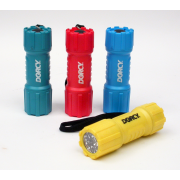
What happens if the power goes out at night and you can't find your flashlights and candles ? Endless toe stubbing....At least that was the story with me. I am like most people, I don't really need a flashlight all the time, but I like to keep some in drawers for household repairs and power emergencies. The problem is either I can't find them when I need them, or they are dead when I get to them. This fact is especially harsh when your in level 10 pain from stubbing your toe into a wall at night. Recently I decided to do something about it.....FLASHLIGHT AND BATTERY STORAGE DRAWER!. All I did was bought one of those three drawer storage containers and fill it with useful emergency items. Instead of just filling it with flashlights and batteries, I also added other things that would benefit me in an emergency. I added cellphone chargers, laptop batteries, lighters and my old cellphone, separating them by battery type. Now I don't have to dig around looking for these items when I need them most. Next I placed the container in an area I know like the back of my hand (my solar system corner). I know it is kinda extreme, but I'll thank myself for not having a sore toe during the next outage.
Sunday, January 23, 2011
Cheap 12 volt led lamp project
When I started out with my inexpensive solar project, I always dealt with trying to find more efficient items to run off of 12 volts. I searched the web for small dc powered devices (fans, lights, laptop power adapters) instead of items needing a power hungry dc to ac inverter. The problem, not a lot of everyday household items have 12 volt equivalents that are cheap. An average 120 volt ac table lamp can be purchased most places, for less than $15.....an average 12 volt dc camping / rv lamp will run you $30-$50 (depending on model). After searching around on ebay, I still found prices for 12 volt lights too high, so I decided to make my own. I came across these new 12 volt led bulbs with E27 bases (the standard base for a 120 light bulb). They were initally designed for an rv, but I figured they would work just as good with my solar system. The bulbs weren't too expensive, $20 for 2x 3 watt bulbs (that put out as much light as a 13 watt cfl). I already had unused 120 volt lamps laying around, so I saved myself on the lamps purchace. For $20 I now had something that was brighter than expensive name brand camping lanterns and had a deep cycle battery supply vs dinky internal batteries. I didn't even have to do much work!, all it took was cutting off the standard wall plug and soldering on a 12 volt cigarette lighter adapter. Now I have a light that I can use just about anywhere and I didn't have to spend a boat load of money to get it!
Labels:
amazon,
apple,
backup power,
cnn,
DIY solar,
emergency lantren,
emergency power kit,
green,
japan,
led,
prepping,
sirmasterpimp,
solar,
solar lantern,
solar panel,
solar project,
youtube
Subscribe to:
Posts (Atom)