Showing posts with label SHTF. Show all posts

Sunday, June 19, 2011

HQRP 6Watt Monocrystalline Flexible Solar Panel Review

With storms, blackouts and tornadoes being a major threat to the stability of power, I recently began looking at solar panels for a lightweight alternative power source during an outage and for summer outdoor use. I was looking for something that wasn't quite as heavy as a traditional fixed position panel and the highest wattage wasn't necessary. I came across a few 5-7 watt thin film folding panels, which were very nice but were also well over my budget at over $100. I then began looking at the flexible panels, which were still pretty expensive, because of their use of expensive solar technologies. It wasn't until late in the search that I came across inexpensive panels using the more common crystalline solar cells, which wouldn't flex as much but were much closer to my budget. One such panel was the HQRP flexible 6 watt, which fit the size preference and budget restraints. The HQRP panel unlike other flexible panels on the market is extremely light weight and can conform to seemingly limitless 12 volt power applications cheaply. The 11 ounce weight, 22 inch height and 6 inch wide footprint makes it light enough for home and camping use, while the $39 price tag makes it a great value vs CIGS fold up panels. The HQRP panel can be used in either fixed or totally portable applications thanks to its included mounting materials and 4 metal grommets. This means that a user can permanently mount the panel to a roof structure or temporarily to a tree via the metal grommets. The panel also has the ability to bend 30 degrees, allowing it to be mounted to a backpack or other uneven surface safely. The flexible 6 watt panel is all weather rated, so it can be used year round without an issue. Over my month of experience with this panel, I recorded its performance in various weather situations and any damage it incurred as a result. To my surprise, this tiny panel was more than up to the task of being used for a small backup power source in just about any situation.

When I first got the panel from the delivery driver, I noticed just how lightweight it was for a 6 watt module. I remembered how heavy 5 watt fixed frame panels were in the past when I got them and was shocked by the HQRP panels minuscule weight. The first thing I thought was that the panel was of low quality because of the low weight, but upon opening the box and inspecting I quickly changed my opinion. Inside of the box was the panel nicely, protected by a foam shell along with mounting materials and a single sheet of paper with helpful instructions. The panel itself was protected by an additional plastic sheathing which prevented any scratching damage to the laminated plastic face. Once I got the panel in my hand and saw that it used grade a solar cells, a fully sealed junction box and nicely sealed corners, any reservations about quality quickly went out the window. Almost immediately I took the panel outside and hooked it up to my multimeter. I got readings of 20 volts open circuit at between 300-400 milliamps (depending on sunlight and shade), which is right in line for what a new 6 watt panel should put out. I decided to leave the panel on my deck without any mounting, to see how it would hold up under various conditions. Within a week of having it out there, a series of strong thunder storms and high winds rolled through. The panel was tossed around and fell a few times with only minimal damage to the corners. I am happy to say that the damage was easily repairable and didn't affect the performance of the panel. The next three weeks consisted of some light rain and extremely hot 100 degree weather. The panel to my surprise didn't warp or deform in any way, despite the laminated plastic front cover. One thing to note is to not immediately touch the panel after it's been in the sun all day. It's surface can reach temperatures well over 100 degrees in direct sunlight and can burn skin. So to sum up it's durability, the panel passed all tests with flying colors.


Using the HQRP is quite simple, it comes with a 22 inch length of positive and negative cabling, which can output to a variety of different devices. All a user needs to do is connect the ends to either a charge controller, female cigarette lighter adapter or other appropriate connectors to get power from it. I primarily used the female 12 volt adapter and some alligator clips to connect to small draw devices and batteries. I tested the panels charging ability via a few small 12 volt power pack units. These units had batteries ranging from 4 amp hours to 10 amp hours, which is about average for camping and outdoor use. I found these power packs to charge from the panel in as little as 5 hours to a maximum of 8. I should note that these battery packs didn't require any regulation like a charge controller, because they have regulation equipment built in. As far as testing the panels ability to run 12 volt devices directly, I used a small 12 volt fan as well as a tiny 12 volt light bulb. Both the fan and the bulb required around 7 watts to run at full tilt. Even though the panel was rated for only 6 watts, it had no problem powering one device at a time in good sunlight. The panel was also used to run a 12 volt to 5 volt dc usb converter, which I used to charge cellphones and other usb powered devices. Since the converter fully regulates incoming power, I saw no difference in charging times from wall adapters and the solar panel charge.

HQRP panel passed all the durability and charging tests that I could throw at it. It went through storms and low light conditions without a single hiccup or problem. It's size and price make it an excellent value vs other more expensive solar types, meaning anyone on a budget can buy one. The panel might not be the most powerful, but it's ability to charge communication devices, run fans directly and charge batteries for larger items makes it a best buy on my list. To get an HQRP flexible 6 watt panel of your own, please follow the links below.

Link to HQRP's site

Amazon.com link

Wednesday, May 25, 2011

Energizer 9 Led Hybrid Solar Lantern Review

The energizer corporation, legendary for their rechargeable and alkaline batteries has recently gotten into the solar business.....well sort of I should say. They just rolled out 3 new solar rechargeable products, including a spotlight, flashlight as well as a solar lantern for outdoor and emergency uses. I recently reviewed the solar lantern over the course of 2 weeks and am completely wowed by it's performance and run time. It has an orange and white plastic exterior, giving center stage to a clear acrylic light diffuser. The diffuser holds 9 led bulbs and is fully adjustable. Lifting the diffuser spreads light a full 360 degrees, while folding will cover an area of 180 degrees up to 10 feet away. Lifting the diffuser will also expose both a metal light reflector and locking battery compartment door. The door can easily be unlocked, by twisting clockwise using a straight flat headed object, such as a screwdriver or small coin. Once inside the user will notice space for 3 alkaline D cell batteries and a small secured green battery pack, located at the top left of the compartment. At the rear of the unit is a small 0.5 watt solar panel used to recharge the green battery pack. The solar cell is encased in an adjustable orange housing and uses amorphous silicon technology (great for solar efficiency in low and high light conditions). Also located around back, near the top is a 5 position switch controlling the led bulbs functions and selecting between the two power sources. The unit is pretty light weight, weighing only 1.5 lbs without the D cells, between 2 - 2.5lbs with the D cells ( depending on battery brand).


Unlike other solar lanterns I've used in the past, the energizer has a great deal of light output and tons of ingenious features to make it one of the best on the market. One feature includes the cleverness to accommodate 3 regular D cell batteries, in addition to the solar battery pack. This allows users to not have to worry about accidentally forgetting the batteries during their next camping or fishing trip. A second innovative feature is the ability to adjust the led's up or down, providing the right type of light for any application. As far as the led bulbs there are 9 total, 8 white and 1 amber. The white bulbs are located inside of twin fogged diffusers, for even light dissipation in almost infinite adjustable positions. Running at 66 lumens, the 8 white led's  provide room filling light without any dark spots or light artifacts. The single amber led provides less than 5 lumens and is intended to be a used as a night light. Even though it's light output is rather faint, the amber bulb still allows users to see basic items comfortable within 2 feet of the front of the unit. Probably one of the nicest features on the lantern, is the ability to run off of either the alkaline cells or the solar battery pack. Selecting between the two sources is easy with the built in 5 way switch. The middle position is off, while  the left 2 functions control the night light and high beam. The left position runs off of the solar power pack, the right providing the same functions runs off of the 3 D cell batteries. As for run times, the solar power pack provides 2.5 hours of bright illumination, 4 hours of total illumination. The 3 Alkaline cells will provide up to 165 hours of light, with around 4 days of bright light. Even though there is a slight voltage difference between the solar 3.6 volt pack and the combined 4.5 volts from the alkaline cells, light output is near the same.

I will be the first to admit that I am not really a devoted camping / outdoors person, so the energizers uses will come in handy mostly when I'm at home. For that use, it provides a stable lighting backup in case of a power grid failure and the occasional handy job requiring a bright light. I like it's ability to provide light, without the need for hazardous fuels or an open flame. It is more than bright enough to light up an entire room and will run for days with D cell batteries. I do however have some issues with the unit, the first being the white exterior. Not that I don't like the design, just that the white color extends to the base of the unit, so if you place it anywhere less than immaculately clean it will get dirty. The second issue is that there is no charging or battery life indicator located on the unit. This would be a great feature to let me know if the unit is getting adequate sunlight and also the batteries current state of charge. The last issue is that there is no low setting for the white led bulbs.If added the low setting could extend run time a few hours with the solar power pack, or a few days with the D cells. Overall I feel that the energizer hybrid solar lantern is an excellent product, with many great features and uses. It has an affordable price, is made by a trustful company and is a necessity for those pesky bad weather situations. I would definitely recommend this product to family and friends in a heartbeat. My only hope is that energizer corrects the noted issues in later iterations of this lantern.


You can get an energizer solar lantern of your own by checking with your local retailers or by shopping various online stores.

Monday, April 25, 2011

MXDL 3 watt 1aaa luxeon led flashlight review

The mxdl 1 aaa flashlight is a great and affordable alternative to more expensive pen lights. It features a powerful 3 watt luxeon led emitter, capable of pushing out around 35 lumens of light. The body of the mxdl is made from high quality aircraft grade aluminum, while the lense and click button are made from plastics and rubber. As far as the size and feel, it fits nicely in the pocket and is easy to hold when in use. It comes with a pocket clip, making it perfect for a shirt or pant pocket. The battery life is above average with around 2 hours of bright light and up to 5 hours of usable light. I bought the mxdl flashlight to replace an aging maglite solitaire, which still had an inefficient incandescent style bulb. Not only is the mxdl 5 time brighter, it also will provide up to 3 hours more battery life than the maglite. The primary buyer of the mxdl is going to be someone who needs a light to carry all the time. Someone in the repair or service industry, like a computer technician or  hone inspector will greatly appreciate it. Whatever the case, anyone who buys this light won't be disappointed. Over the course of 3 months owning and using this light, it has been a good experience. Its anodized coating holds up well against scratches and moisture and is reliable enough for everyday use. I would definitely recommend this light to anyone in the market to buy one. It may be cheap, but it's brightness and build quality give it a good, premium feel

If you would like to buy this flashlight, please follow the link below:

http://www.dealextreme.com/p/mxdl-xt-7119-3w-50-lumen-led-flashlight-with-clip-color-assorted-1-aaa-55748

Friday, February 4, 2011

Store flashlights and batteries in a common place for emergencies!

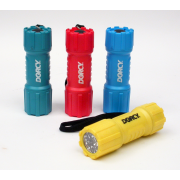
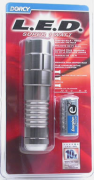
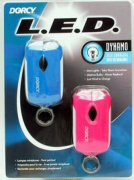
What happens if the power goes out at night and you can't find your flashlights and candles ? Endless toe stubbing....At least that was the story with me. I am like most people, I don't really need a flashlight all the time, but I like to keep some in drawers for household repairs and power emergencies. The problem is either I can't find them when I need them, or they are dead when I get to them. This fact is especially harsh when your in level 10 pain from stubbing your toe into a wall at night. Recently I decided to do something about it.....FLASHLIGHT AND BATTERY STORAGE DRAWER!. All I did was bought one of those three drawer storage containers and fill it with useful emergency items. Instead of just filling it with flashlights and batteries, I also added other things that would benefit me in an emergency. I added cellphone chargers, laptop batteries, lighters and my old cellphone, separating them by battery type. Now I don't have to dig around looking for these items when I need them most. Next I placed the container in an area I know like the back of my hand (my solar system corner). I know it is kinda extreme, but I'll thank myself for not having a sore toe during the next outage.